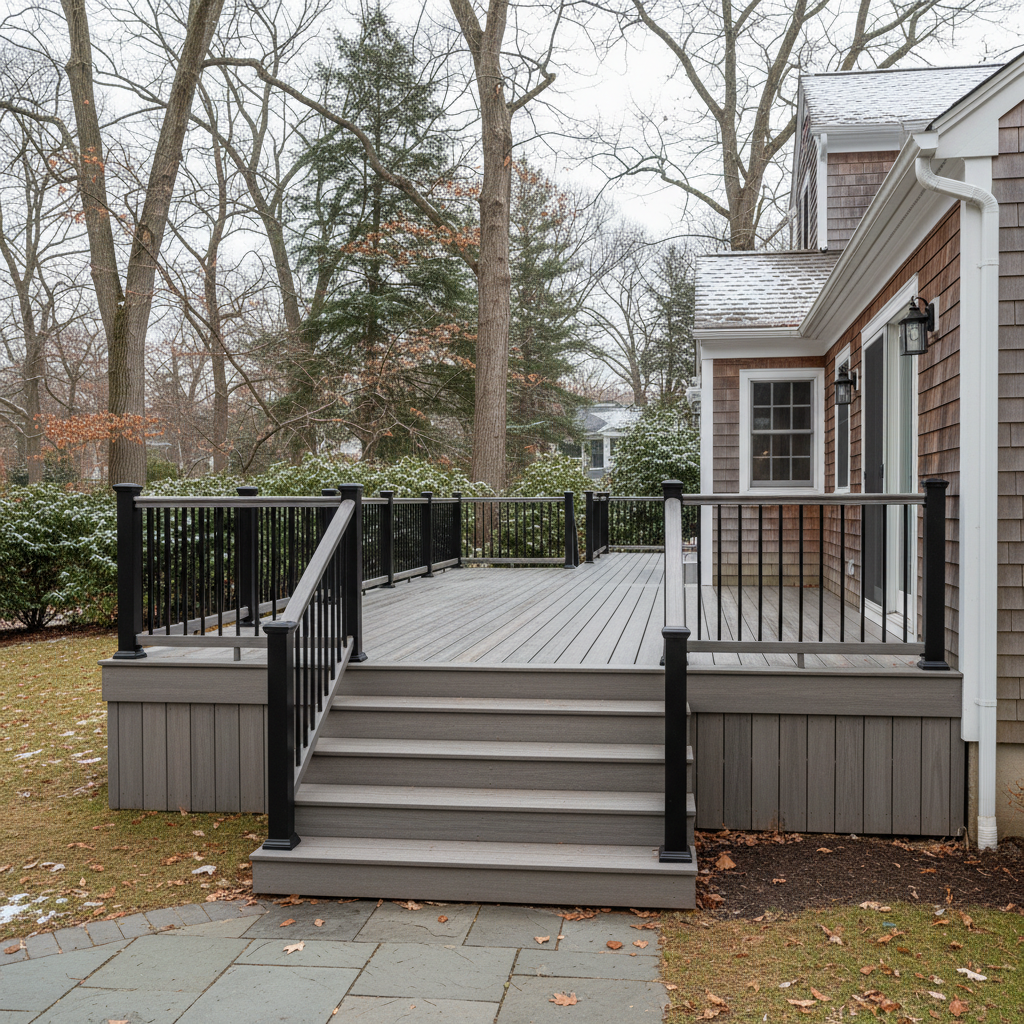
You're probably wondering when the best time is to build that new Trex deck, or how to keep the one you've got looking sharp through a Brookline year. It's a good question, and one I get a lot. Our climate around here, especially with those unpredictable New England seasons, means you've got to think a bit differently about outdoor projects than folks down south.
Scheduling Your Trex Deck Build in Brookline
Look, if you want a new deck, the sooner you get on the schedule, the better. But realistically, there are times that are smoother for us and for you. Spring and early summer are always popular, and for good reason. The ground's thawed out, the weather's generally cooperative, and you've got the whole warm season ahead to enjoy your new space. We're usually booking out a few months in advance for those slots, so if you're dreaming of Memorial Day cookouts on a new deck, you should be calling me around January or February.
Fall's another fantastic time. The humidity drops, the air is crisp, and it's often dry. We can get a lot of work done efficiently. Plus, imagine having a brand-new deck ready for those beautiful autumn evenings, maybe with a fire pit. The downside is that once we hit late October, you're rolling the dice with early freezes or even an unexpected snowstorm, which can push timelines.
Winter? Not impossible, but definitely trickier. Digging footings in frozen ground is a beast, and nobody wants to be out there trying to cut composite boards with numb fingers. We can do some prep work, sure, but actual construction usually grinds to a halt once the real cold sets in. Summer, especially July and August, can be great, but you're dealing with higher humidity and sometimes those afternoon thunderstorms that can slow things down. My advice? Plan ahead for spring or fall, and be flexible if you're aiming for summer.
How Brookline Weather Affects Trex Deck Work
Trex, or any composite decking for that matter, is pretty resilient. That's why folks choose it. But even the toughest materials have conditions they prefer for installation. Here's what I've seen over the years working on decks all over Brookline, from the tree-lined streets of Chestnut Hill to the triple-deckers near Coolidge Corner:
- Temperature Swings: Composites expand and contract with temperature. We have to account for that during installation, leaving proper gaps. If we install on a super cold day and don't leave enough space, when it heats up in July, you could see buckling. Vice versa, installing on a scorching day means those gaps will look huge in the winter. We know how to manage this, but extreme temps make it harder to get perfect.
- Rain and Humidity: While Trex itself isn't bothered by rain once installed, we certainly are during construction. Heavy rain means we can't work. High humidity can also make some adhesives or sealants (if used for specific details) cure slower. It's more about worker comfort and safety, and keeping our tools and materials dry.
- Snow and Ice: This is a non-starter for major construction. You can't dig, you can't safely move materials, and everything is just slower and more dangerous. That's why winter builds are usually limited to very specific, protected scenarios.
- Our Clay Soil: A local detail that many homeowners don't think about is our soil. Around here, especially in some of the older parts of Brookline, we've got a lot of clay. When it's wet, it's a muddy mess that sticks to everything. When it's dry, it can be like concrete. This impacts how easily we can dig footings and how much mud we're tracking around your yard. It's just part of the job, but it's something we're always mindful of.
Protecting Your Trex Deck Year-Round
One of the big draws of Trex is its low maintenance. It's not like wood where you're staining and sealing every couple of years. But 'low maintenance' doesn't mean 'no maintenance.' You still need to give it a little love to keep it looking its best through our tough New England seasons.
- Regular Cleaning: The biggest thing you can do is just keep it clean. Sweep off leaves, dirt, and debris regularly, especially after a storm. Leaves, if left to rot, can leave tannins that stain the surface. A good scrub with soap, water, and a soft-bristle brush a couple of times a year will do wonders. There are also specific deck cleaners designed for composites if you have tougher stains.
- Snow Removal: You can shovel snow off your Trex deck. Just be careful. Use a plastic shovel, not a metal one, to avoid scratching the surface. Don't use rock salt or calcium chloride-based ice melts, as these can damage the deck's surface. Sand is a better option for traction, or look for pet-safe, composite-friendly ice melt products.
- Watch for Mildew and Mold: In our damp climate, especially in shaded areas or where air circulation is poor, mildew and mold can pop up. A good cleaning with a composite deck cleaner that has a mildewcide will usually take care of it. Make sure to rinse thoroughly.
- Furniture and Grills: Use protective pads under furniture legs to prevent scratches. For grills, always use a grill mat underneath to catch grease splatters. Those oil stains can be tough to get out if they sit for too long.
Trex is a fantastic investment for a Brookline home. It holds up beautifully, looks great, and frees you up from a lot of the chores that come with a wood deck. Just like anything else though, a little seasonal awareness and a bit of care go a long way. If you're thinking about a new deck or have questions about maintaining your current one, don't hesitate to give us at Pioneer Deck Solutions a call. We're always happy to chat about what works best for our local conditions.