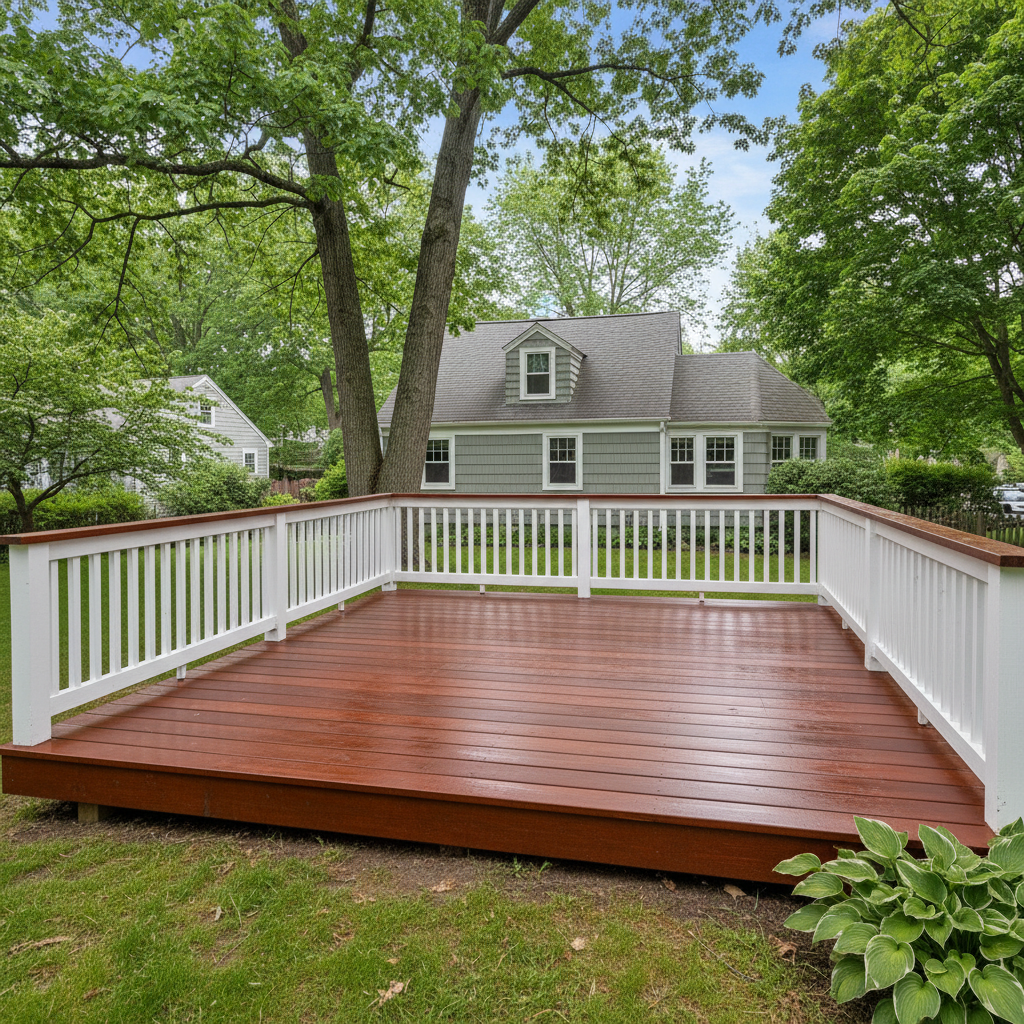
When water soaks straight into your deck boards instead of beading up on the surface, your wood is absorbing moisture. Around Brookline, outdoor living spaces take a heavy beating from the elements. Between the heavy dampness rolling in off the ground, the relentless July sun baking the neighborhood, and the freeze-thaw cycles of January snowstorms, untreated wood does not stand a chance. Pioneer Deck Solutions sees plenty of historic homes from Coolidge Corner to Aspinwall Hill with back decks that get neglected until the boards start splintering apart.
Keeping a coat of paint or stain on your deck is not just about curb appeal. It creates a physical shield that stops moisture from penetrating the fibers, which prevents rot, warping, and costly structural failures down the road. If you want to get more seasons out of your timber without starting from scratch every few years, here is what you need to know about keeping it protected.
What Regular Deck Maintenance Looks Like
Homeowners do not need to spend every weekend babying their backyard. A solid maintenance routine actually keeps things simple.
- Sweep off wet leaves, pine needles, and organic debris every couple of weeks, especially during the fall drop in neighborhoods heavy with mature maples and oaks.
- Wash the surface down with a gentle cleaner in the spring to strip away winter grime and pollen buildup.
- Check your railings and stair treads after the ground thaws to make sure nothing has loosened up from shifting soil.
- Keep an eye on high-traffic zones near sliding doors where foot traffic wears down the protective finish fastest.
Warning Signs Your Deck Needs Attention
Waiting until wood turns completely silver and fuzzy means you are already past due for maintenance. If you notice water absorbing quickly into the boards, flaking paint, or small cracks opening up around the fastener heads, your protective seal has failed. Once you spot gray patches where the old stain has completely worn away to bare wood, moisture has an open invitation to settle in. Catching these early warning signs lets you get away with a simple cleaning and re-coating instead of a massive board replacement project.
How to Extend the Life of Your Stain or Paint Job
Timing is everything when you are working with exterior finishes in Massachusetts. Never apply a new coat of paint or stain onto damp wood or under a blazing hot summer sun, because the product will dry too fast and peel right off. You want a stretch of dry, moderate weather with temperatures hovering comfortably between 60 and 80 degrees. Proper prep work matters more than the brand of stain you buy. Power washing, thorough sanding to open up the wood pores, and letting the lumber dry out completely for a few days make all the difference between a finish that fails by November and one that stays strong for years.
When to Call a Professional
Some weekend do-it-yourself projects make total sense, but stripping a failing, multi-layered solid stain or dealing with extensive wood rot on structural joists can quickly turn into a difficult task. If your deck has structural damage, soft spots near the ledger board, or if you simply do not have the free time to spend three days scraping and sanding, bring in some backup. Pioneer Deck Solutions handles the heavy prep, makes sure the moisture levels are right, and applies professional-grade penetrating finishes designed to handle local New England weather head-on.